

Quick Answer:
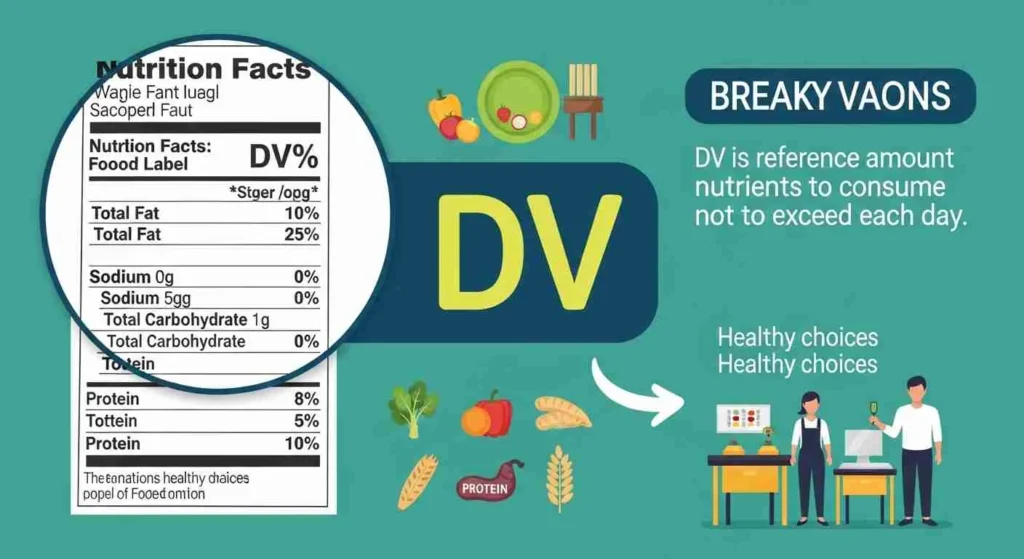
DV in nutrition stands for Daily Value, a reference number that shows how much a nutrient in one serving of food contributes to a healthy daily diet.
When reading nutrition labels on packaged foods, you may notice a column labeled Percent DV. Many people see this but are not fully sure what it means or how to use it. Understanding DV is essential for making smart food choices, managing health goals, and comparing products accurately.
This detailed guide explains what DV means in nutrition, where it came from, how it is used on food labels, how to read it correctly, examples, comparisons with related terms, FAQs with answers, and practical tips for everyday eating.
Understanding the Meaning of DV in Nutrition
DV stands for Daily Value. It represents the recommended daily intake level of a specific nutrient based on a standard 2000 calorie diet.
DV helps consumers quickly see whether a food is:
- Low in a nutrient
- Moderate in a nutrient
- High in a nutrient
The percent DV listed on food labels shows how much one serving contributes to your daily nutritional needs.
Origin and Development of Daily Value
The concept of Daily Value was developed to simplify nutrition information for the public.
Before DV, nutrition labels used multiple reference systems, which made them difficult to understand. Health authorities introduced DV to provide a single, consistent standard that could be easily read by consumers.
DV values are based on scientific research and are periodically updated to reflect modern dietary guidelines.
Why Daily Value Is Important
DV helps people make healthier food choices without needing deep nutrition knowledge.
It allows you to:
- Compare similar products
- Limit nutrients like saturated fat and sodium
- Increase intake of beneficial nutrients like fiber and vitamins
- Balance your overall diet
By using DV, you can quickly assess the nutritional quality of foods.
How DV Is Used on Nutrition Labels
DV appears on food labels as a percentage.
For example:
- 5 percent DV or less means low
- 20 percent DV or more means high
This guideline helps consumers decide whether a food fits their nutritional goals.
Examples of DV in Real Food Labels
Example one
A cereal with 25 percent DV of fiber is considered high in fiber
Tone
Helpful and informative
Example two
A snack with 30 percent DV of sodium may be high and should be eaten in moderation
Tone
Cautionary
Example three
A yogurt with 15 percent DV of calcium contributes well to bone health
Tone
Positive and encouraging
Common Nutrients That Use DV
DV is used for many nutrients, including:
- Calories
- Fat
- Saturated fat
- Cholesterol
- Sodium
- Carbohydrates
- Fiber
- Protein
- Vitamins and minerals
Each nutrient has its own DV based on dietary recommendations.
Example Table Daily Value on Nutrition Labels
| Nutrient | Daily Value | Percent DV Example |
|---|---|---|
| Fiber | 28 grams | 25 percent |
| Sodium | 2300 mg | 30 percent |
| Calcium | 1300 mg | 15 percent |
| Vitamin C | 90 mg | 40 percent |
This table shows how percent DV reflects daily nutrient contribution.
DV Compared With Similar Nutrition Terms
| Term | Meaning | Difference From DV |
|---|---|---|
| RDA | Recommended Dietary Allowance | Used for nutrient planning |
| AI | Adequate Intake | Used when RDA is unavailable |
| UL | Upper Intake Level | Maximum safe intake |
| Percent DV | Portion of DV per serving | Label display format |
DV is designed specifically for easy consumer use.
Common Mistakes When Reading DV
Many people misunderstand DV.
Common errors include:
- Thinking DV is personalized
- Ignoring serving size
- Assuming higher DV is always better
- Overlooking high DV of unhealthy nutrients
DV is a general guide, not a personalized nutrition plan.
Who Should Pay Special Attention to DV
DV is helpful for:
- People managing blood pressure
- Individuals watching cholesterol
- Those increasing fiber intake
- Anyone comparing packaged foods
It supports healthier eating decisions.
Alternate Meanings of DV
Outside nutrition, DV may mean different things, but on food labels, DV always refers to Daily Value.
Professional and Practical Alternatives
In clinical nutrition, professionals may use:
- Dietary guidelines
- Individual nutrient requirements
- Personalized meal plans
DV remains the most user friendly option for consumers.
FAQs
- What does DV mean in nutrition?
DV means Daily Value, showing how much a nutrient contributes to daily needs. - What does percent DV tell you?
It shows the percentage of the daily recommended amount in one serving. - Is DV based on a 2000 calorie diet?
Yes, DV is standardized using a 2000 calorie reference. - Is 20 percent DV good?
Yes, 20 percent DV or higher is considered high. - Can DV vary by age or gender?
DV is a general guide and does not reflect individual needs. - Is DV the same as RDA?
No, DV is for labels, while RDA is for nutrient planning. - Should I avoid foods with high DV of sodium?
Yes, high sodium DV may increase health risks. - Why is DV helpful for consumers?
It simplifies nutrition label reading and food comparison.
Conclusion
DV in nutrition stands for Daily Value, a simple yet powerful tool that helps consumers understand how foods fit into a balanced diet. By reading percent DV, people can quickly identify foods that are high or low in specific nutrients and make smarter eating choices.
While DV is not personalized, it provides a reliable reference for comparing foods and managing overall nutrition. Learning how to use DV correctly can greatly improve everyday dietary decisions and long term health.
See Also More :
- What Does Nil Mean in Spades Card Game Explained Simply for 2026
- What Does APRN Mean in Medical Terms Complete Explanation for 2026