
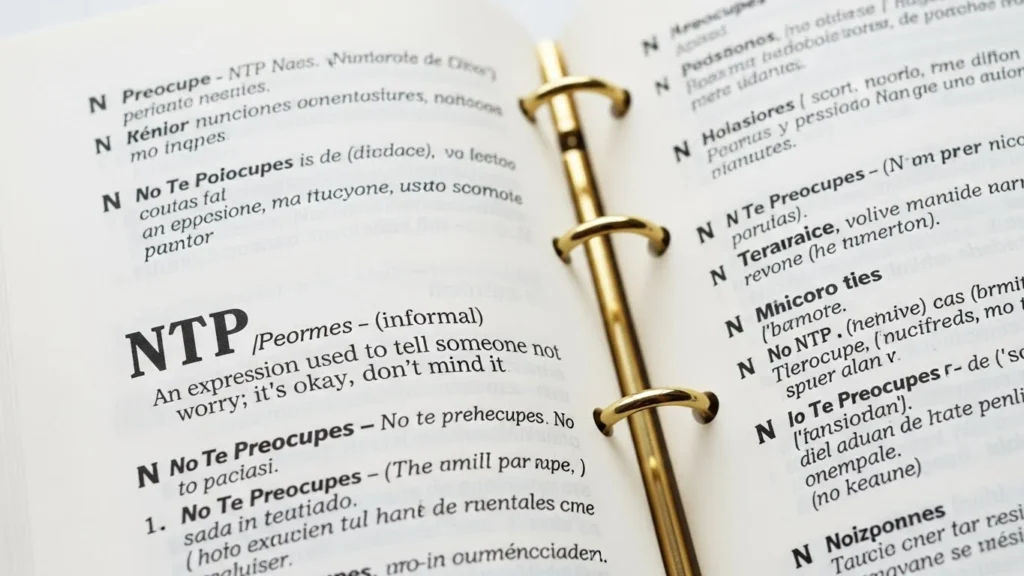

If you’ve ever chatted with Spanish speaking friends online, scrolled through TikTok comments, or read WhatsApp messages full of abbreviations, you may have stumbled across “NTP” and wondered: What does NTP mean in Spanish? You’re not alone.
This tiny three letter expression is incredibly common in casual Spanish conversations, yet it often confuses learners and even native speakers from different regions.
Definition:
NTP in Spanish usually stands for “No te preocupes”, which translates to “Don’t worry” in English.But there’s more to it than a simple translation. Depending on context, tone, and platform, NTP can sound warm and reassuring, neutral and practical, or even a little dismissive. In this in depth guide, we’ll break down everything you need to know about what NTP means in Spanish, how it’s used, where it comes from, and how to respond appropriately.
What Does NTP Mean in Spanish?
NTP is a Spanish chat abbreviation for “No te preocupes.”
In English, this phrase can mean:
- Don’t worry
- No worries
- It’s okay
- Don’t stress about it
It’s widely used in text messages, social media comments, chats, and informal digital communication. You’ll almost never see NTP in formal writing, academic Spanish, or professional emails unless the tone is intentionally casual.
Origin of “NTP” in Spanish
Where did NTP come from?
The abbreviation NTP emerged naturally with the rise of:
- SMS texting (limited character counts)
- Online chat platforms
- Instant messaging apps like WhatsApp and Messenger
- Social media platforms such as Facebook, Twitter/X, and Instagram
Just like English abbreviations such as “np” (no problem) or “dw” (don’t worry), Spanish speakers shortened “No te preocupes” to NTP for speed and convenience.
Why did it become popular?
Several reasons explain its popularity:
- Efficiency: Typing three letters instead of a full phrase saves time.
- Universality: The phrase “don’t worry” applies to many situations.
- Tone flexibility: It can sound comforting, casual, or dismissive depending on context.
- Youth and internet culture: Younger users especially favor abbreviations.
Today, NTP is understood across most Spanish speaking countries, though its frequency may vary by region.
How NTP Is Used in Real Life
Common contexts where you’ll see NTP
You’re most likely to encounter NTP in:
- WhatsApp or Telegram chats
- Instagram and TikTok comments
- Online gaming chats
- Informal emails or DMs
- Group chats among friends or classmates
It’s rarely spoken aloud. People almost always say “No te preocupes”, not “NTP,” in face to face conversation.
Tone and Meaning: What NTP Really Conveys
One of the most important things to understand about NTP is that its meaning depends heavily on tone and context.
1. Friendly or Reassuring Tone 😊
In most cases, NTP is warm and comforting.
Example:
— Perdón por llegar tarde.
— NTP, todo bien.
Meaning:
“Sorry for being late.”
“Don’t worry, it’s all good.”
Here, NTP expresses kindness and understanding.
2. Neutral or Practical Tone 😐
Sometimes, NTP is simply informational, with no emotional weight.
Example:
— ¿Te envié el archivo correcto?
— Sí, NTP.
Meaning:
“Did I send you the correct file?”
“Yes, no worries.”
This version is calm and efficient, often used in work or school chats (but still informal).
3. Dismissive or Slightly Cold Tone 😬
In some contexts, NTP can sound abrupt or dismissive, especially if used alone.
Example:
— Perdón si te molesté.
— NTP.
Depending on the relationship, this might feel like:
- “It’s fine, whatever.”
- “Don’t worry about it (and let’s move on).”
Tone matters. Adding emojis or extra words softens the message.
Examples of NTP in Context
Below are realistic examples showing how NTP appears in everyday Spanish communication.
Casual Chat Examples
- Gracias por esperar.
NTP 😊 - Perdón por no contestar antes.
*NTP, estaba ocupado también. - Olvidé traer el cuaderno.
*NTP, te presto uno.
Labeled Example Table: NTP Usage by Context
| Context | Example Sentence | Intended Tone |
|---|---|---|
| Friendly | NTP 😊, no pasa nada. | Warm, reassuring |
| Neutral | NTP, ya lo resolví. | Practical |
| Slightly dismissive | NTP. | Brief, closed |
| Supportive | NTP, todos cometemos errores. | Encouraging |
Comparison With Similar Spanish Expressions
To fully understand what NTP means in Spanish, it helps to compare it with similar phrases.
NTP vs. “No pasa nada”
- NTP: “Don’t worry.”
- No pasa nada: “It’s no big deal / Nothing happened.”
Both are reassuring, but no pasa nada often minimizes the issue more strongly.
NTP vs. “Todo bien”
- NTP: Focuses on reducing worry.
- Todo bien: Reassures that the situation is fine overall.
They’re often used together:
NTP, todo bien.
NTP vs. “Tranqui”
- Tranqui: Slang for “Relax” or “Calm down.”
- More casual and youthful than NTP.
NTP vs. “No hay problema”
- No hay problema: “No problem.”
- Slightly more formal than NTP, suitable for semi professional chats.
Alternate Meanings of NTP (Briefly Explained)
While NTP almost always means “No te preocupes” in Spanish chats, it can have other meanings in different contexts.
Technical Meaning (Non Spanish Specific)
In technology, NTP can also mean:
- Network Time Protocol
This has nothing to do with Spanish language usage and only appears in IT or technical discussions.
Context makes the meaning clear.
Polite and Professional Alternatives to NTP
Because NTP is informal, you may want alternatives in professional or respectful situations.
More Polite Options
- No se preocupe (formal “you”)
- No hay ningún problema
- No se preocupe por eso
Semi Formal Alternatives
- Todo está bien
- No pasa nada
Using these instead of NTP makes your Spanish sound more polished and appropriate in work or academic settings.
When You Should (and Shouldn’t) Use NTP
Use NTP When:
- Chatting with friends or peers
- Messaging classmates or colleagues casually
- Responding quickly in informal conversations
- You want to sound relaxed and friendly
Avoid NTP When:
- Writing formal emails
- Talking to clients or supervisors
- Communicating in official documents
- You want to show extra politeness or empathy
Cultural Notes: NTP Across Spanish Speaking Countries
One interesting aspect of NTP is that it’s widely understood across Latin America and Spain, but frequency varies.
- Mexico & Central America: Very common in chats
- Argentina & Uruguay: Used, but alternatives like tranqui are more popular
- Spain: Understood, but no pasa nada is often preferred
- Colombia & Peru: Common in texting, especially among younger users
Despite regional differences, NTP is rarely misunderstood.
Practical Tips for Using NTP Naturally
- Add emojis 😊 to soften tone
- Pair it with another phrase for warmth
- Avoid using it alone if you want to sound caring
- Don’t overuse it in serious conversations
Example upgrade:
- Cold: NTP.
- Warmer: NTP 😊, todo está bien.
Conclusion:
Understanding what NTP means in Spanish helps you sound more natural and confident in modern communication. At its core, NTP = “No te preocupes”, or “Don’t worry,” but context is everything. It can reassure a friend, keep a conversation flowing smoothly, or if used carelessly sound a bit distant.
FAQs
What does NTP stand for in Spanish texting?
NTP stands for “No te preocupes,” which means “Don’t worry.” It’s mainly used in casual, written communication like chats and social media messages.
Is NTP polite or rude in Spanish?
NTP is generally polite and friendly, but it can sound dismissive if used alone or without context. Adding emojis or extra words makes it warmer.
Can I use NTP in a professional email?
It’s best not to. In professional settings, use “No se preocupe” or “No hay problema” instead, as NTP is considered informal slang.
Do people say NTP out loud?
No, NTP is almost exclusively written. When speaking, people say the full phrase “No te preocupes.”
Is NTP used in all Spanish speaking countries?
Yes, most Spanish speakers understand it, though its frequency and popularity vary by region and age group.
What’s the difference between NTP and “No pasa nada”?
Both are reassuring. NTP focuses on easing worry, while “No pasa nada” minimizes the importance of the issue.
Can NTP have other meanings?
Outside of Spanish chats, NTP can mean “Network Time Protocol” in technical contexts, but this is unrelated to language usage.
How can I respond to NTP in Spanish?
You can reply with “Gracias,” “Perfecto,” or continue the conversation naturally, as NTP usually signals that everything is fine.
See Also More:
- What Does -1 Mean in Football Betting? Definition, Examples & Smart Betting Tips
- What Does NSA Mean in a Relationship? Definition, Meaning, and Real Life Use 2026