

Quick Answer:
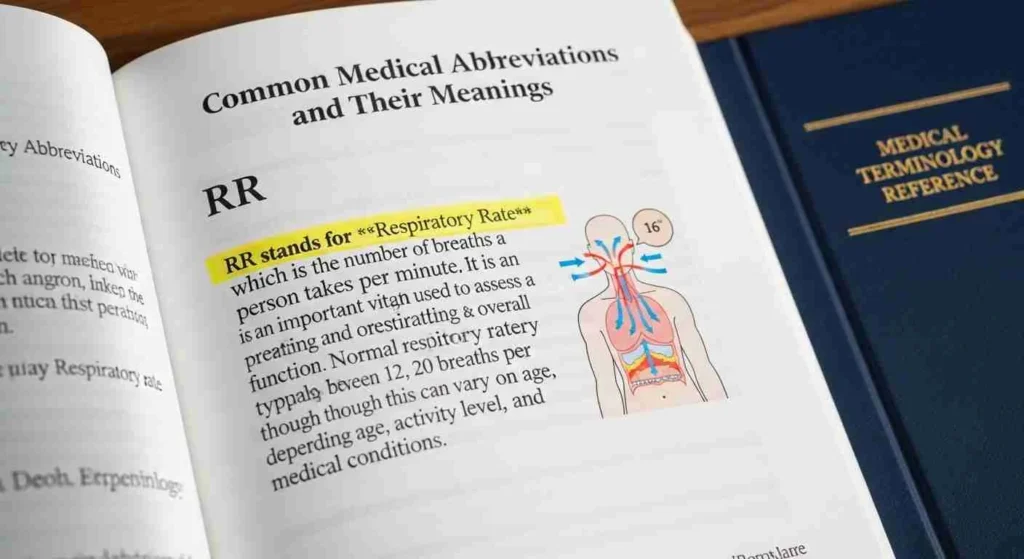
RR in medical terms most commonly stands for Respiratory Rate, which measures how many breaths a person takes per minute and is a key vital sign used to assess breathing and overall health status.
In hospitals, clinics, and medical charts, abbreviations are used to save time and communicate efficiently. One abbreviation you will frequently see on patient records, nursing notes, and monitoring devices is RR. While it looks simple, RR plays a crucial role in evaluating a patient’s condition, especially in emergency care, critical care, and routine health assessments.
This comprehensive guide explains what RR means in medical terms, its origin, clinical importance, real world usage, alternate meanings, comparisons with similar medical abbreviations, and frequently asked questions with clear answers.
Understanding the Meaning of RR in Medical Terms
RR primarily refers to Respiratory Rate, which is the number of breaths a person takes in one minute. It is one of the core vital signs, along with heart rate, blood pressure, temperature, and oxygen saturation.
Respiratory Rate helps healthcare providers determine how effectively a patient is breathing. Changes in RR can signal serious medical conditions even before other symptoms appear.
A normal RR varies by age group:
- Adults usually have 12 to 20 breaths per minute
- Children generally have a higher respiratory rate
- Infants can have rates above 30 breaths per minute
Because breathing reflects oxygen supply and carbon dioxide removal, RR is essential in assessing respiratory and metabolic health.
Origin and Clinical Development of the Term RR
The abbreviation RR became standard as medical documentation evolved to include quick shorthand for vital signs. Doctors and nurses needed a consistent, universally understood way to record breathing rate during patient examinations.
Over time, RR was incorporated into:
- Hospital charting systems
- Emergency medical forms
- Intensive care monitoring devices
- Electronic health records
Its popularity grew as respiratory illnesses, trauma care, and chronic lung diseases required constant monitoring. Today, RR is considered a foundational metric in both routine checkups and life-threatening emergencies.
Why Respiratory Rate Is So Important in Healthcare
Respiratory Rate is often the earliest indicator of clinical deterioration. Even before heart rate or blood pressure change, RR can rise or fall when the body is under stress.
Medical professionals monitor RR to:
- Detect breathing difficulties
- Identify infections or fever-related stress
- Recognize asthma or COPD flare-ups
- Evaluate anxiety or panic attacks
- Monitor recovery after surgery
For example, an unusually high RR may suggest pain, infection, or low oxygen levels, while a very low RR may indicate sedation, neurological issues, or drug overdose.
How RR Is Used in Real Medical Settings
RR appears in nearly every healthcare environment, from emergency rooms to routine physical exams.
Example one
The nurse recorded RR as 18 breaths per minute
Tone
Neutral and clinical
Example two
Patient arrived with elevated RR indicating respiratory distress
Tone
Serious and diagnostic
Example three
After treatment the RR returned to normal levels 😊
Tone
Positive and reassuring
These examples show how RR communicates a patient’s breathing status quickly and effectively.
Normal and Abnormal RR Values Explained
Understanding normal ranges helps interpret RR correctly.
Normal Respiratory Rate
A normal RR indicates stable breathing and adequate oxygen exchange. Healthcare providers use it as a baseline reference during assessments.
High Respiratory Rate
An elevated RR, known as tachypnea, may occur due to fever, anxiety, lung infections, asthma, or heart problems. It signals that the body is trying to get more oxygen.
Low Respiratory Rate
A reduced RR, called bradypnea, may happen due to medication effects, neurological conditions, or deep sleep states. In severe cases, it may require urgent intervention.
Monitoring RR allows early detection of problems before they worsen.
Other Medical Meanings of RR
Although Respiratory Rate is the most common meaning, RR can represent other medical terms depending on context.
| Medical Context | Meaning of RR | Explanation |
|---|---|---|
| Vital signs | Respiratory Rate | Number of breaths per minute |
| Cardiology | Risk Ratio | Measure used in clinical research |
| Neurology | Reflex Response | Used when evaluating nerve reactions |
| Documentation | Room Rest | Indicates patient should remain in bed |
Despite these alternatives, Respiratory Rate remains the primary and most widely recognized meaning in everyday clinical practice.
Comparison With Similar Medical Abbreviations
Medical abbreviations can look similar but refer to different measurements. Comparing them helps avoid confusion.
| Abbreviation | Full Form | Purpose |
|---|---|---|
| RR | Respiratory Rate | Measures breathing frequency |
| HR | Heart Rate | Measures heart beats per minute |
| BP | Blood Pressure | Measures force of blood against arteries |
| SpO2 | Oxygen Saturation | Measures oxygen level in blood |
| PR | Pulse Rate | Measures pulse beats per minute |
While HR and PR focus on heart function, RR specifically reflects respiratory function, making it vital for diagnosing breathing and metabolic disorders.
Real World Usage of RR in Medical Communication
Healthcare professionals rely on RR during patient evaluation and documentation. It is commonly used in:
- Emergency triage assessments
- ICU monitoring charts
- Post-surgery recovery notes
- Pediatric growth and health evaluations
For instance, a doctor may write
RR elevated likely due to infection
This concise note instantly informs the healthcare team that the patient’s breathing rate is above normal and may require further investigation.
Polite and Professional Alternatives to RR
In formal patient communication or educational materials, professionals may use full terminology instead of abbreviations.
Professional alternatives include:
- Respiratory Rate
- Breathing Rate
- Rate of Respiration
Using full terms improves clarity for patients who may not understand medical shorthand.
Common Misinterpretations of RR
Because RR has multiple meanings, confusion can occur, especially outside medical settings. Some people mistakenly assume RR refers to heart rate or blood pressure. However, RR specifically relates to breathing frequency.
Another misunderstanding is assuming RR only matters during respiratory illnesses. In reality, RR reflects the overall physiological state of the body and can indicate stress, metabolic imbalance, or cardiovascular issues.
FAQs
- What does RR stand for in medical terms?
RR most commonly stands for Respiratory Rate, which measures the number of breaths a person takes per minute and is a key vital sign used to assess breathing and overall health. - What is a normal RR for adults?
A normal adult respiratory rate typically ranges from 12 to 20 breaths per minute, although slight variations may occur depending on activity level, age, and health status. - Why is RR important in patient monitoring?
RR is crucial because it often changes before other vital signs, helping healthcare providers detect respiratory distress, infection, or metabolic problems early. - Can RR indicate serious medical problems?
Yes, abnormal RR values can signal conditions such as asthma attacks, pneumonia, heart failure, anxiety disorders, or drug overdose, requiring prompt medical evaluation. - Is RR measured manually or with machines?
RR can be measured manually by counting breaths per minute or automatically using hospital monitors and wearable health devices. - Does a high RR always mean a breathing problem?
Not always, as increased RR can also result from pain, fever, anxiety, or physical exertion, but persistent elevation should be medically assessed. - How is RR different from heart rate?
RR measures breathing frequency, while heart rate measures how many times the heart beats per minute; both are vital signs but reflect different body systems. - Where do patients usually see RR written?
Patients commonly see RR on medical charts, discharge summaries, nursing notes, and monitoring screens during hospital visits or routine checkups.
Conclusion
RR in medical terms most commonly means Respiratory Rate, one of the essential vital signs used to evaluate breathing efficiency and overall physiological stability. It provides rapid insight into a patient’s respiratory health and can signal early warning signs of illness or distress.
Understanding RR helps patients better interpret medical records, communicate confidently with healthcare providers, and recognize the importance of breathing patterns in maintaining health. Whether used in routine checkups or critical care monitoring, RR remains a fundamental measurement that supports accurate diagnosis, timely treatment, and effective patient care.
By knowing what RR means and how it is used, both patients and healthcare learners can navigate medical conversations with greater clarity and confidence.
See Also More :
- What Does Scalene Mean in Math Complete Explanation and Definition for 2026
- What Does 999 Mean in Love Spiritual and Emotional Meaning Explained for 2026