
Quick Answer:
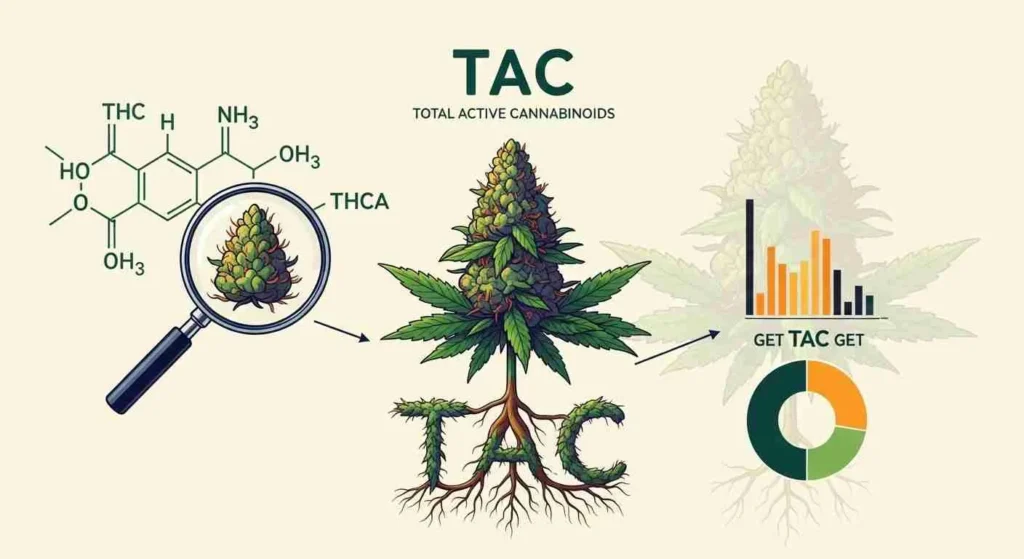
TAC in weed stands for Total Active Cannabinoids. It refers to the total percentage of all active cannabinoids present in a cannabis product, not just THC.
If you’ve ever looked at a cannabis product label, you may have noticed several percentages listed. Most people focus on THC, but another important number that often appears is TAC. Many users wonder what TAC means, how it differs from THC, and whether it matters when choosing a product.
This complete guide explains what TAC means in weed, how it works, how it is calculated, why it matters, differences between TAC and THC, real world examples, FAQs with answers, and a clear conclusion.
Understanding the Meaning of TAC in Weed
TAC stands for Total Active Cannabinoids. It represents the combined percentage of all cannabinoids that can produce effects in the body.
Cannabinoids are natural compounds found in cannabis plants. The most well-known cannabinoid is THC (tetrahydrocannabinol), which causes psychoactive effects. However, cannabis contains many other cannabinoids such as:
- CBD (cannabidiol)
- CBG (cannabigerol)
- CBN (cannabinol)
- THCV (tetrahydrocannabivarin)
- CBC (cannabichromene)
TAC includes all of these active compounds combined into one total percentage.
How TAC Is Different From THC
Many people confuse TAC with THC, but they are not the same.
THC measures only the main psychoactive compound. TAC measures the total of all active cannabinoids in the product.
For example:
If a product contains:
- 20% THC
- 2% CBD
- 1% CBG
The TAC would be approximately 23%.
So while THC shows strength related to intoxication, TAC reflects the broader chemical profile.
Why TAC Matters in Cannabis Products
TAC is important because cannabis effects are not based on THC alone.
Many researchers and users believe in something called the entourage effect, which suggests cannabinoids work better together than individually. This means the overall experience depends on the combined interaction of cannabinoids, not just THC levels.
A product with slightly lower THC but higher TAC may feel stronger or more balanced than one with high THC alone.
How TAC Is Calculated
TAC is calculated by adding together the measurable percentages of all active cannabinoids present in the lab test results.
Cannabis products are tested in laboratories to determine:
- THC percentage
- CBD percentage
- Minor cannabinoid percentages
The total of these active cannabinoids equals TAC.
However, some labels may calculate TAC differently depending on whether they include raw acidic forms like THCA or only activated cannabinoids.
TAC vs Total Cannabinoids
It is important to understand another related term: Total Cannabinoids.
- Total Cannabinoids may include both active and inactive forms.
- TAC focuses specifically on active cannabinoids that affect the body.
Reading product labels carefully helps avoid confusion.
Example of TAC on a Weed Label
Example one
A cannabis flower shows:
THC 18%
CBD 1%
CBG 0.5%
TAC 19.5%
Tone
Informative and factual
Example two
A concentrate shows:
THC 75%
CBD 3%
TAC 80%
Tone
Potent and strength focused
These examples show how TAC gives a fuller picture of overall cannabinoid strength.
Does Higher TAC Mean Stronger Effects
Not always.
While higher TAC indicates more total cannabinoids, the experience depends on:
- Individual tolerance
- Method of consumption
- Cannabinoid balance
- Terpene profile
A product with moderate TAC but balanced cannabinoids may feel smoother than a product with very high TAC dominated by THC.
TAC and the Entourage Effect
The entourage effect explains why TAC can matter more than THC alone.
Cannabinoids interact with each other and with the body’s endocannabinoid system. Minor cannabinoids may influence how THC feels, reducing anxiety or enhancing relaxation.
Because TAC includes these minor cannabinoids, it can provide insight into overall potential effects.
Comparison Table TAC vs THC
| Term | Meaning | Measures | Focus |
|---|---|---|---|
| THC | Tetrahydrocannabinol | Psychoactive compound | Intoxication level |
| TAC | Total Active Cannabinoids | Combined active cannabinoids | Overall potency |
| CBD | Cannabidiol | Non-intoxicating cannabinoid | Relaxation support |
| Total Cannabinoids | All cannabinoids present | Active and inactive forms | Full chemical profile |
Common Misunderstandings About TAC
Some users believe TAC is just another word for THC. This is incorrect.
Others assume higher TAC automatically means better quality. Quality also depends on terpene content, cultivation method, and personal preference.
TAC is helpful, but it is only one part of understanding a cannabis product.
FAQs
- What does TAC mean in weed?
TAC stands for Total Active Cannabinoids, meaning the total percentage of active cannabinoids in a cannabis product. - Is TAC the same as THC?
No, THC measures one cannabinoid, while TAC includes all active cannabinoids combined. - Does higher TAC mean stronger weed?
Not necessarily. Effects depend on cannabinoid balance and personal tolerance. - Why is TAC important?
It helps show the full potency of a product beyond just THC levels. - Is TAC listed on all weed products?
Not always, but it is common on lab tested products. - Does TAC include CBD?
Yes, TAC includes CBD and other active cannabinoids. - What is a good TAC percentage?
It depends on product type and personal preference. - Is TAC useful for beginners?
Yes, but beginners should focus on balanced cannabinoid profiles rather than high percentages.
Conclusion
TAC in weed stands for Total Active Cannabinoids, representing the combined percentage of all active cannabinoids in a cannabis product. Unlike THC, which measures only psychoactive strength, TAC provides a broader understanding of overall potency.
While TAC can help users compare products, it should not be the only factor considered. Cannabinoid balance, terpene content, and personal tolerance all influence the final experience.
Understanding TAC allows consumers to make more informed decisions and choose cannabis products that match their preferences and goals.
See Also More :
- What Does Bogey Mean in Golf Complete Meaning and Scoring Guide for 2026
- What Does ASL Mean in Text Messages Complete Meaning Guide for 2026